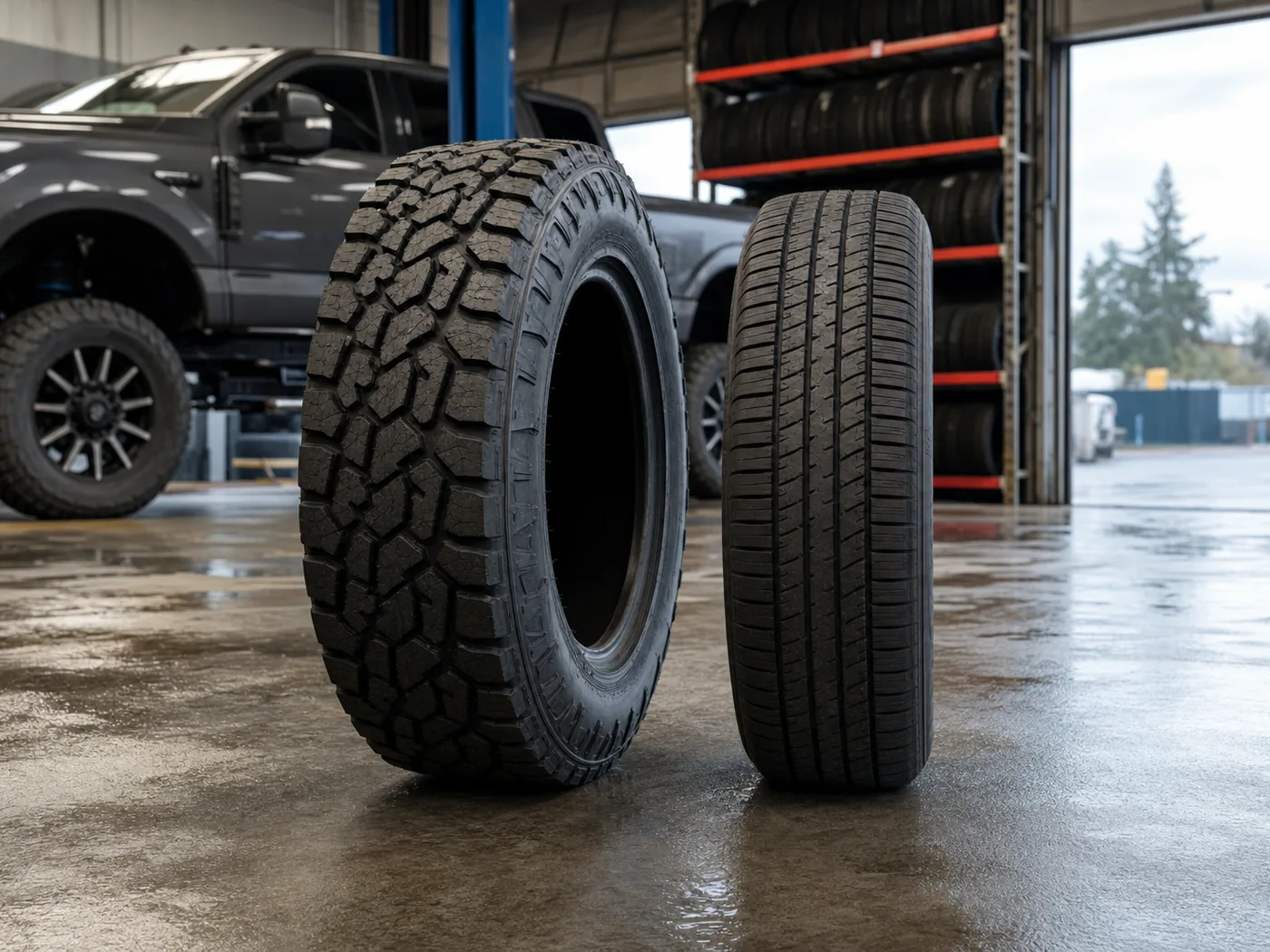
Walk down any tire aisle — or scroll any tire site — and you will see two letters doing an enormous amount of work: the prefix in front of the size. LT275/65R20 and P275/60R20 look nearly identical on paper, but they describe tires built to different engineering standards, for different loads, at different inflation pressures. For anyone who tows, hauls, or runs a truck for work, the prefix is the single most consequential part of the size — more than brand, more than tread pattern, and far more than price.
What the Prefixes Actually Mean
A P-metric tire (P275/60R20, or often no prefix at all in Euro-metric sizing) is a passenger-standard tire. It is engineered for cars, crossovers, and light-duty use on half-ton trucks — prioritizing ride comfort, low rolling resistance, and quiet operation.
An LT tire (LT275/65R20) is built to the light-truck standard: heavier ply construction, stiffer and thicker sidewalls, deeper tread, and the ability to carry substantially more weight when inflated to higher pressures. LT tires are what three-quarter-ton and one-ton trucks wear from the factory, and what serious towing and payload work generally requires. If you are unsure how to decode the rest of the size, our guide to reading a tire sidewall covers every marking in detail.
The Construction Difference Is Structural, Not Cosmetic
The differences are baked into the carcass of the tire. LT tires use more robust body plies, reinforced bead packages, and sidewalls designed to resist flex under load. That stiffness is what keeps a loaded tire stable — reducing sway when a trailer pushes the truck, resisting punctures on gravel and job sites, and holding its shape under tongue weight that would visibly deform a passenger tire's sidewall.
The cost of that construction is a firmer ride and slightly higher rolling resistance. That trade is worth it when the truck works for a living. It is unnecessary if the truck never carries more than groceries.
Load Capacity and the Idea of Reserve
Every tire has a maximum load rating at a specified pressure, and every truck has a placard on the driver's door jamb stating the minimum tire specification the manufacturer requires. The number that matters is not just whether your tires can carry the truck — it is how much reserve capacity remains once the truck is loaded: fuel, passengers, tools, bed payload, and trailer tongue weight, which can add 500 to 1,000 pounds directly onto the rear axle.
A tire running near its maximum rating builds more heat, wears faster, and leaves no margin for a heavy day. LT tires exist to provide that margin.
When LT Is the Right Call
Choose LT construction if any of the following describes your truck: it is a three-quarter-ton or one-ton (the placard will specify LT); it regularly tows a trailer near the truck's rated capacity; it carries a service body, utility boxes, or a slide-in camper; it works on gravel, aggregate, or unfinished job sites where sidewall punctures end workdays; or it runs sustained highway miles fully loaded. For work trucks in the Portland area, loaded braking distance in the rain is a real consideration — a tire with capacity in reserve is a tire that still has grip in reserve.
When P-Metric Is Perfectly Fine
A half-ton pickup that commutes, runs light loads, and tows a small utility trailer a few weekends per year is well served by the P-metric or Euro-metric size it came with. You will get a quieter ride, better fuel economy, and often a lower purchase price. Upgrading to LT tires on a truck that never uses the capacity buys you a stiffer ride and little else.
Two Rules When Switching or Mixing
First, never mix P-metric and LT tires on the same axle — their load and pressure characteristics differ, and handling becomes unpredictable. Second, if you switch a truck from P-metric to LT sizing, understand that an LT tire generally needs higher inflation pressure to carry the same load as the P-metric tire it replaced. The door placard, your owner's manual, and the tire manufacturer's load-and-inflation tables are the authorities here — set pressure by the load the truck actually carries, not by the maximum number on the sidewall.
Getting the Right Answer for Your Truck
The honest answer to "LT or P-metric?" starts with your door placard and how the truck earns its keep. Send us the size on your placard and a sentence about how you use the truck — towing, payload, job sites, daily driving — and we will quote an appropriate option from the brands we source, with availability confirmed before we send you a number. You can see the sizes we commonly quote on our pickup and light truck tires page.
Worth Considering Before Your Next Order:
Does the load your truck actually carries on its heaviest week — payload plus tongue weight — leave meaningful reserve within your current tires' rating, or are you running near the limit?
What does your door-jamb placard specify — and are the tires on the truck today the same standard (P-metric or LT) the placard calls for?
When your current tires were installed, did anyone ask how you use the truck before recommending them?