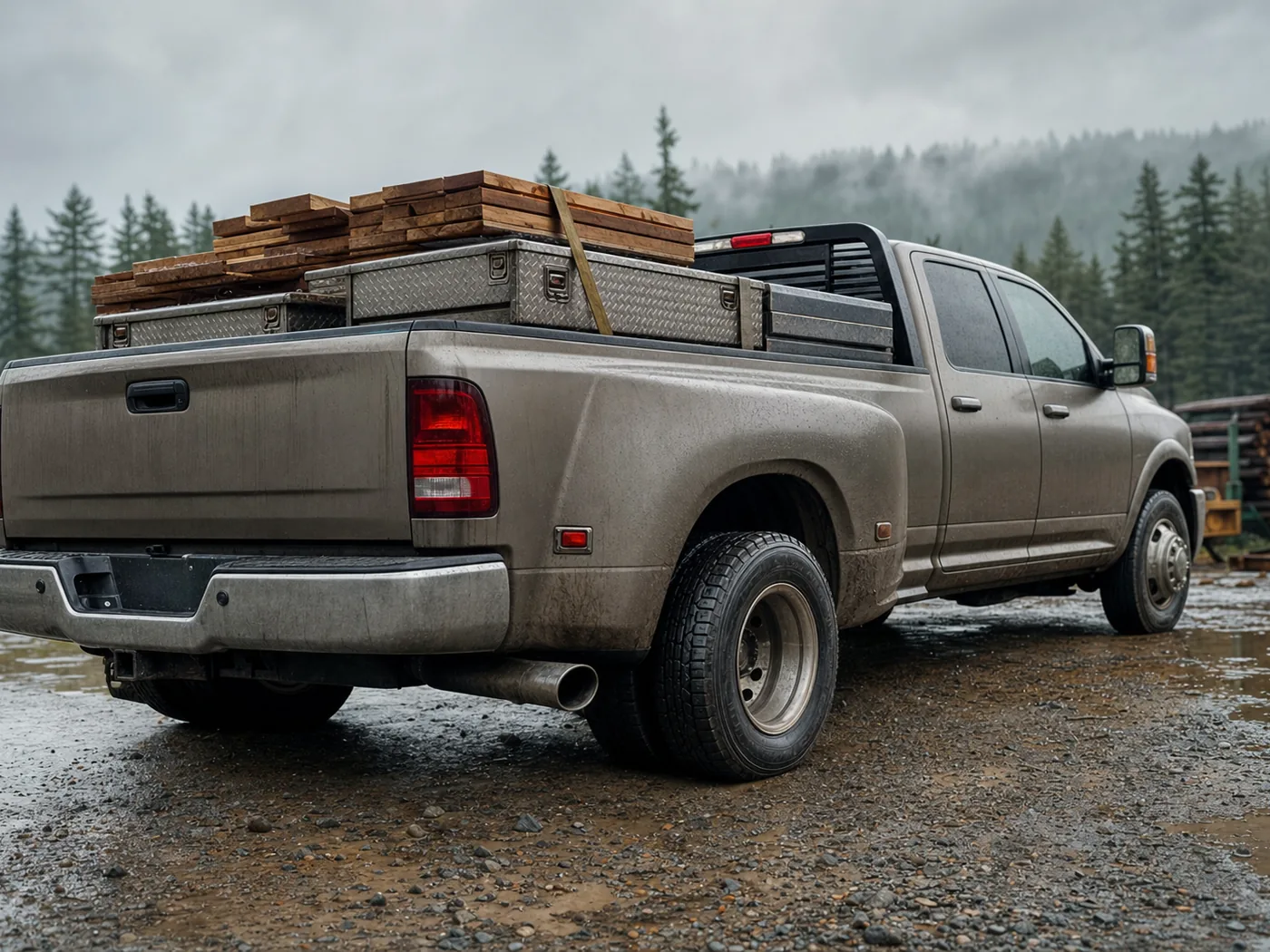
No specification generates more questions on pickup tires than load range E — and no term is more misunderstood than "10-ply." Buyers ask for a 10-ply tire expecting ten layers of rubber; sellers use the term loosely; and the actual meaning, which lives in a letter and a pressure rating, gets lost. Here is what load range E really is, what it does for a working truck, and how to know whether you need it.
The Load Range Ladder
Light-truck (LT) tires carry a load range letter — most commonly C, D, E, and on some heavy applications F. Each step up the ladder means the tire is engineered to carry more weight at a higher maximum inflation pressure. Load range C tires are typically rated to carry their maximum load at 50 psi, D at 65 psi, and E at 80 psi. The letter is printed on the sidewall after the size — for example, LT245/75R17 121/118S Load Range E — and decoding the rest of that string is covered in our sidewall reading guide.
What "10-Ply" Actually Means
The ply terminology is a fossil. Decades ago, tire strength really was measured by counting cotton body plies — a 10-ply tire had ten of them. Modern radial construction achieves far greater strength with two or three plies of much stronger materials, so the industry kept the old scale as an equivalence rating: load range C corresponds to a 6-ply rating, D to 8-ply, and E to 10-ply. A modern load range E tire does not contain ten plies. It contains the strength that ten cotton plies once provided — usually with a fraction of the layers.
Pressure Is the Mechanism
Here is the part most buyers miss: a load range E tire's extra capacity only exists at its higher inflation pressures. The carcass is built to safely hold 80 psi, and it is that pressure — not the letter itself — that carries the additional weight. Run a load range E tire at 45 psi and it carries roughly what a passenger tire carries at 45 psi. This is why the right daily pressure comes from your door-jamb placard and the manufacturer's load-and-inflation tables, matched to the load the truck actually carries — not from the maximum number stamped on the sidewall.
Does Your Truck Need Load Range E?
If you drive a three-quarter-ton or one-ton — an F-250 or F-350, Ram 2500 or 3500, Silverado or Sierra 2500HD and up — your truck almost certainly left the factory on load range E tires, and the placard requires them. Replacing them with anything less is not an option.
For half-ton and midsize trucks the placard usually specifies a passenger-standard tire, and load range E becomes a judgment call. It earns its place when the truck tows near its rated limit, carries heavy payload regularly, or works on surfaces where sidewall toughness prevents downtime. It is unnecessary weight and stiffness for a truck that stays light. Our guide to LT versus P-metric construction walks through that decision in detail.
The Ride Quality Question, Honestly
Load range E tires ride firmer — the stiff carcass that resists squirm under 3,000 pounds of payload does not soften because the bed is empty. Modern E-rated tires are considerably more civilized than their reputation, and much of the harshness people attribute to the tire is actually over-inflation: an unloaded truck running 80 psi will ride like a lumber wagon. Set pressure to the placard and the manufacturer's tables for your actual load, and the ride penalty shrinks to a fair price for the capability.
Checking What You Have and Getting What You Need
Two minutes tells you everything: read the load range on your current sidewalls, then compare it against the door-jamb placard. If you are replacing tires on an HD truck, quote load range E from the start. Send us your size and how the truck works — we will confirm availability across the brands we source and return a real number. Common E-rated sizes are listed on our pickup and light truck tires page.
Worth Considering Before Your Next Order:
Do you know the load range letter on your truck's current tires — and whether it matches what the door placard requires?
Is your daily tire pressure set for the load the truck actually carries, or is it simply set to the maximum printed on the sidewall?
If you tow or haul near your truck's limits a few times a month, does your current tire choice leave you reserve capacity on those days — or only on the empty ones?