"Will 35s fit my truck?" is one of the most-asked questions in the pickup world — and one of the most carelessly answered. Between two different sizing languages, suspension differences measured in fractions of an inch, and load ratings that quietly disappear when sizes go up, upsizing is a subject where general answers cause specific problems. Here is a clear framework, and an honest note about where a framework ends and your individual truck begins.
Two Sizing Languages, One Tire
Light-truck sizes come in metric — LT285/70R17 — and flotation format — 33x10.50R17. Metric describes width in millimeters, sidewall as a percentage, and wheel diameter; flotation states the overall diameter and width directly in inches. Every flotation size has close metric neighbors: an LT285/70R17 stands roughly 32.7 inches tall, making it the common "33." An LT315/70R17 measures about 34.4 inches — the everyday "35." The conversion is approximate by design; two tires sharing a nominal size can differ by half an inch of true diameter between manufacturers. Decoding both formats is covered fully in our sidewall guide.
What Fits a Stock Truck
Most late-model half-ton and HD pickups leave the factory on tires between 31 and 33 inches tall. As a general pattern, many stock trucks accept a modest step up — often one size wider or taller than factory — without contact, because manufacturers leave some clearance for chains and suspension travel. The contact points that end the conversation are the front wheel-well liners at full steering lock, the frame-side suspension components, and on some platforms the front air dam. "It fits driving straight" is not fitment; full lock over a driveway apron is the real test.
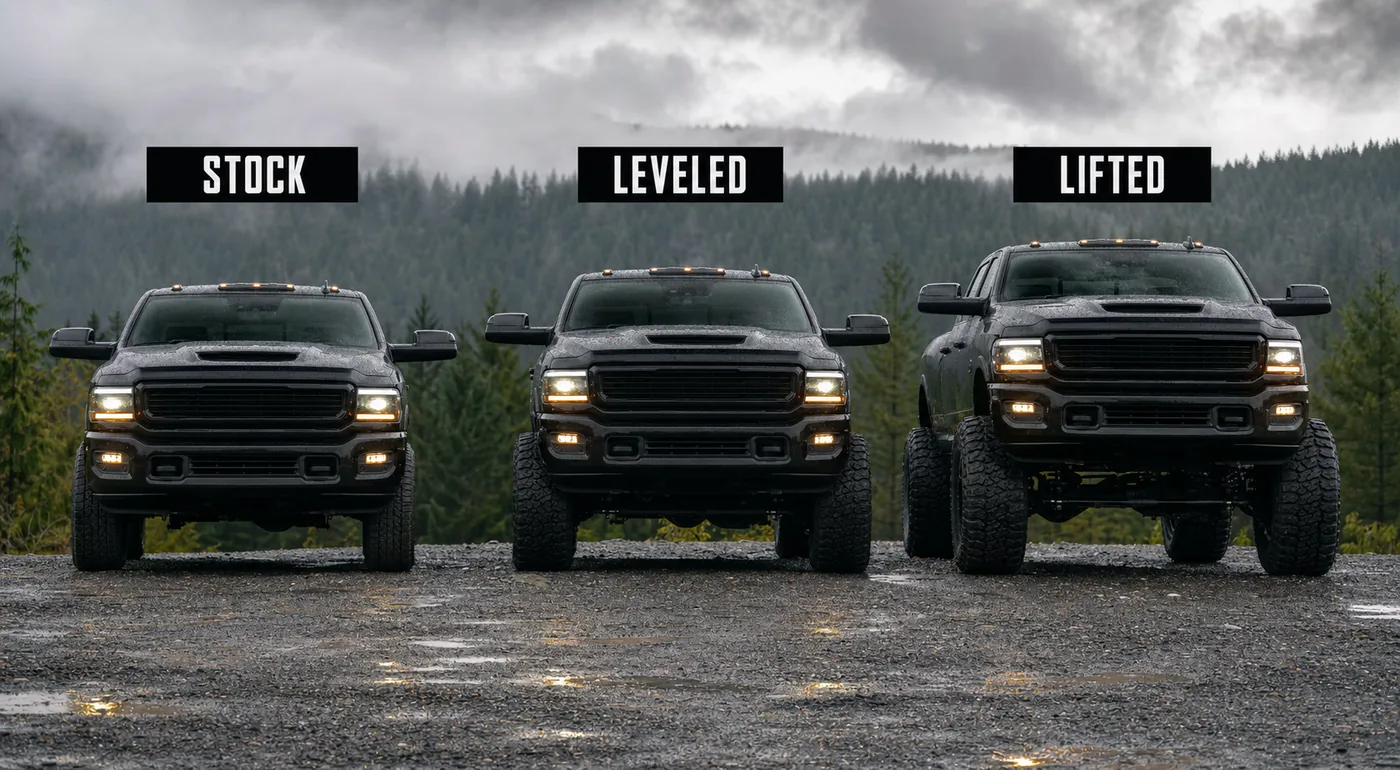
Leveled Trucks: Where 33s Live and 35s Begin
A two-inch leveling kit — the most common suspension change on working pickups — raises the front to match the rear and opens the front wheel wells. On many platforms this makes true 33s comfortable and puts 35s at the edge: possible on some trucks with minor liner trimming, a genuine rub on others. Wheel offset matters as much as tire size at this stage — a wheel that pushes the tire outward trades frame clearance for fender clearance, and changes the answer entirely.
Lifted Trucks: 35s, 37s, and the Fine Print
Dedicated lifts of four inches and up are what 35s and 37s are actually engineered around. The tire fits; the fine print is everything attached to it. Larger diameters effectively raise your gearing — acceleration and towing response dull unless axle gears are corrected. Your speedometer and odometer read slow until recalibrated, which also skews the readings your ABS and traction systems depend on. And unsprung weight climbs sharply: a 37-inch tire and wheel can add fifteen-plus pounds per corner over stock, which brakes and suspension feel every day. None of this argues against upsizing — it argues for doing it with open eyes.
The Load Rating That Quietly Walks Away
Here is the trap that matters most for working trucks: aggressive flotation sizes are frequently offered in load ranges below what an HD truck's placard requires. Upsizing an F-350 onto a tire rated C when the placard demands E does not just void the arithmetic on your load capacity — it puts a working axle on tires unable to carry it. Whatever the diameter, the load range letter and the placard requirement remain non-negotiable. This applies doubly to trucks that tow; our LT construction guide explains why.
How to Get a Real Answer for Your Truck
Frameworks end where your specific truck begins — year, cab, drivetrain, wheel offset, and suspension state all move the line. The reliable path: tell us your truck, its suspension (stock, leveled, lifted and by how much), your current tire size, and what you want to run. We will quote actual sizes and load ranges from the brands we source, with availability confirmed first. The 33s, 35s, and 37s we commonly quote — from 16- through 22-inch wheels — are listed on our pickup and light truck sizes section.
Worth Considering Before Your Next Order:
Have you tested your intended size against full steering lock and loaded suspension travel — or only against another owner's forum post about a similar truck?
If you upsize, does the specific tire you want exist in the load range your door placard requires — and have you checked, rather than assumed?
Are you prepared for the secondary costs of 35s or larger — recalibration, possible re-gearing, faster brake wear — as part of the tire budget, or would those arrive as surprises?